
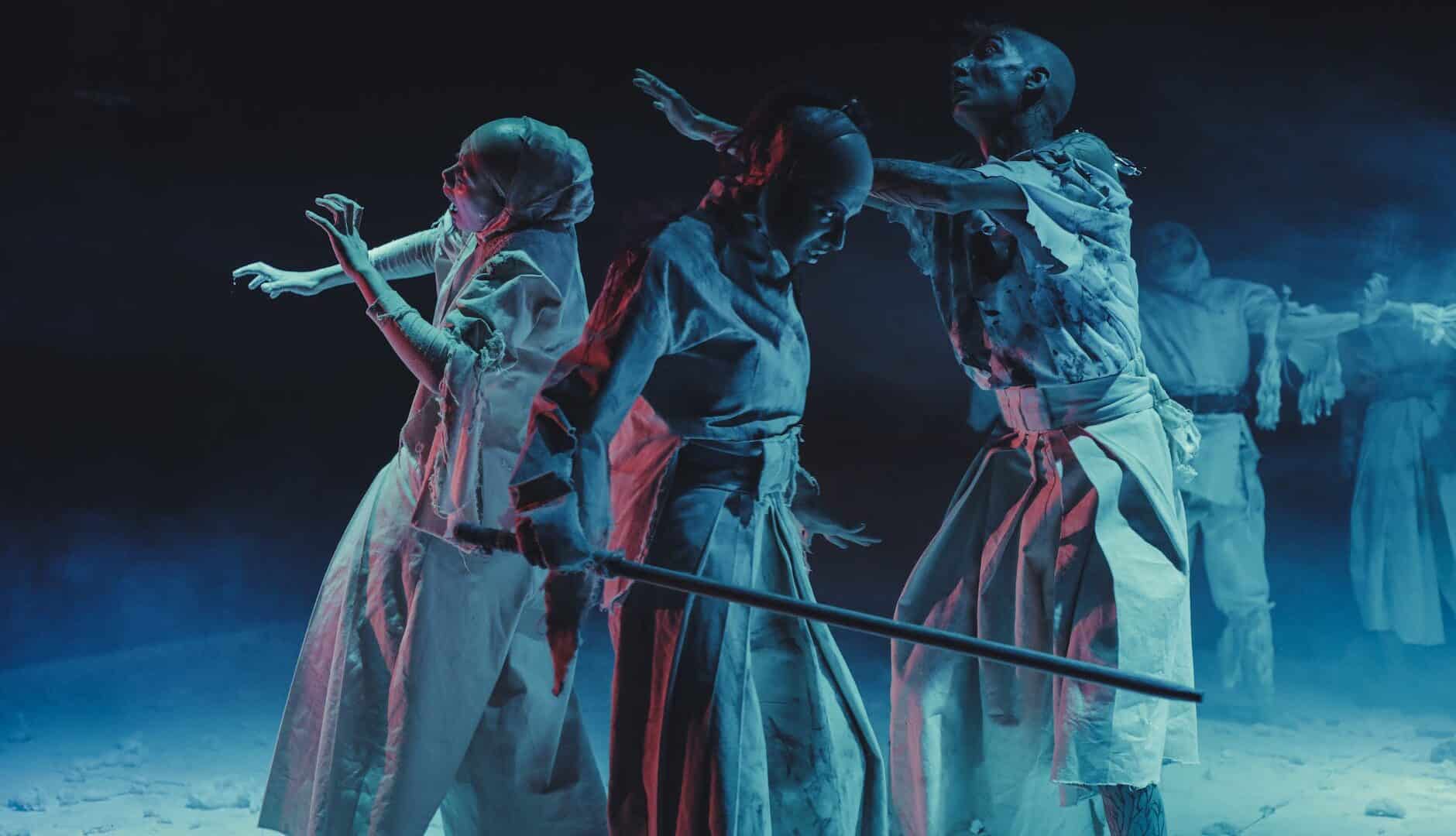
The debate over Straight Plays1 vs. Musical Theater2 is fundamental. It merits serious consideration regarding the significance of these two art forms in modern society. For centuries, plays have acted as a vital medium for expressing societal struggles, ideas, and beliefs. They provide a unique platform for voicing concerns, challenging authority, and inspiring transformative change. Renowned playwrights such as William Shakespeare, August Wilson, and Arthur Miller have produced works that mirror their times. These works also engage contemporary audiences. This engagement demonstrates the enduring power of dramatic literature. While musicals have gained prominence, straight plays are essential to the theater industry and should not be overlooked. Here, we will elucidate why plays hold greater importance than musicals.
Straight plays are vital in modern theater, offering artistic freedom and cultural relevance. They delve into complex human experiences, provoke thought, and inspire change, enriching our understanding of society without the constraints of musicals. Let’s celebrate their enduring impact!
- The article compares Plays vs Musicals, emphasizing the artistic integrity of straight plays.
- Straight plays explore complex themes and character development without the constraints of music and choreography.
- Classic plays remain culturally timeless, addressing universal themes that resonate across generations.
- The author argues that plays offer deep insights into the human experience, unlike musicals that may prioritize spectacle.
- Ultimately, the piece calls for greater appreciation of straight plays and their essential role in theater.
Table of contents
Artistic Integrity
One of the key advantages of straight plays is the artistic freedom they afford playwrights. They possess the ability to explore complex themes and develop characters that are rich in nuance, challenge, and relatability. This freedom enables playwrights to confront contemporary issues directly and meaningfully, all while adhering to their artistic vision. In contrast, musicals often grapple with the constraints of commercial success, which can inhibit creativity. Musicals frequently prioritize catchy songs to attract larger audiences. They often include elaborate dance routines. This approach can overshadow the narrative and thematic depth crucial to powerful storytelling.
Why Straight Plays matter more than Musical Theater
The craft of writing a successful play presents its own set of significant challenges. Without the enhancement provided by music and choreography, playwrights must rely exclusively on their writing skills. They must captivate their audience and effectively convey their messages. This dependency on dialogue requires creating compelling interactions. These interactions not only advance the plot but also emotionally resonate with viewers. The process involves meticulous attention to structure, character arcs, and narrative progression. Every choice made by the playwright must serve to construct a cohesive and engaging story. While musicals also require creativity, they sometimes face criticism for emphasizing spectacle over substantive plot development.
Cultural Timelessness
The continued relevance of theater is clear. The ongoing production of ancient Greek plays, Shakespearean works, and other theatrical masterpieces shows this. These timeless pieces endure. They capture the cultural, social, and political challenges of their times. These challenges still resonate with modern audiences. The themes explored in these classic works—such as human relationships, power dynamics, and betrayal—remain powerful and relatable.
By engaging with these texts, audiences gain crucial insights into historical societal issues, enriching their understanding of contemporary challenges. Thus, these plays entertain. They also educate. They provoke thought and foster dialogue between the past and present. Regional American theater companies have been a stalwart of exposing the human condition to eager audiences.
While musicals certainly possess their own appeal, straight plays occupy a indispensable position within the theater world. They emphasize artistic integrity. They present engaging creative challenges. Offering a cultural timelessness that facilitates profound exploration of the human experience. As we celebrate the arts in our society, it is vital to recognize the significant contributions of straight plays. These plays enhance individual understanding. They contribute to collective cultural development. By acknowledging their role, we can ensure that this vital form of expression continues to thrive and inspire future generations.
Quoting the Greatest Plays Ever Written
Plays hold greater importance than musicals. Let us take a look at some of the most famous lines ever written.
In William Shakespeare’s Hamlet, “To be or not to be, that is the question,” is a soliloquy reflecting our existential struggles.
From Tennessee Williams’ A Streetcar Named Desire, “I have always depended on the kindness of strangers,” is a line that highlights the precariousness of life and the importance of compassion.
From Athol Fugard’s Master Harold… and the Boys, “The only way to do it is to do it,” reflects the character’s determination to fight against all odds and succeed in life.
Straight Plays vs Musical Theater reflect our society and the human condition. They provide us with a profound understanding of our past and present and have cultural timelessness. Musicals are enjoyable forms of entertainment, but they have limitations in their artistic and creative liberties. For theater professionals, academics, playwrights, producers, actors, and theater fans, plays will always remain the cornerstone of the theater industry. So, let us continue to appreciate and celebrate the art of playwrighting. They create works that unveil the truth about our lives. This art should never be undervalued.
Why These Plays Resonate Beyond the Stage
The world of theater and literature converges brilliantly on the stage, where the written word transforms into living, breathing art. Plays are not just scripts, bound in ink and paper. They are vessels of human emotion. Serving as mirrors that reflect society. As windows into the intricacies of the human condition. Reading plays allows us to explore the duality of life and art. It enriches our understanding of storytelling. It also deepens our appreciation for the dramatic craft.
Dive into these timeless works. Each play bears a tale etched in memory and imagination. They shape not only the stage but also the lives of those who dare to engage with its worlds.
1. “Hamlet” by William Shakespeare
To be, or not to be—the eternal question that transcends time. Shakespeare’s Hamlet is a vortex of grief, revenge, madness, and philosophical contemplation. The Prince of Denmark, with his unparalleled soliloquies, introspects on the fragility of existence. He reflects on the weight of decisions and the shadows of betrayal. The play’s themes of mortality are powerful. The corruption of power also echoes through centuries. These themes make the play as resonant today as it was in the 1600s. Shakespeare’s mastery lies in the play’s characters, multifaceted and deeply human, from Ophelia’s tragic innocence to Claudius’s calculating ambition. Hamlet is not merely read; it is experienced—its poetic vitality seeps into the soul.
2. “A Streetcar Named Desire” by Tennessee Williams
Blanche DuBois, with her tragic elegance, arrives amidst the raw, intoxicating atmosphere of New Orleans, desperate for sanctuary. A Streetcar Named Desire explores the crumbling facade of Southern gentility clashing against the harsh realities of post-war America. Its characters, especially Stanley Kowalski and Blanche, are deeply flawed, brilliantly layered, and achingly real. Williams captures the fragility of human desires, the collision of worlds, and the violence that intimacy often conceals. A quintessential piece of American theater, the play continually urges us to confront the raw, untamed corners of our humanity.
3. “Waiting for Godot” by Samuel Beckett
Few plays have dared to explore the quintessence of existence as profoundly as Waiting for Godot. Beckett gives us two vagabonds—Vladimir and Estragon—anchored in a barren landscape, waiting endlessly for a figure named Godot. Their absurd conversations and circular routines masterfully explore the futility of time. They delve into the incomprehensibility of meaning. The resilience of hope is also addressed. Beckett’s iconic work transcends narrative. It is a meditation on the human condition. It is marked by humor, despair, and the quiet perseverance of enduring.
4. “The Crucible” by Arthur Miller
Set against the grim paranoia of the Salem witch trials, Miller’s The Crucible is a scorching indictment of mass hysteria and the chilling consequences of fear-fueled persecution. Beneath its historical veil lies a potent allegory of McCarthyism, where individuality succumbs to the tyranny of conformity. Elizabeth Proctor’s stoicism, John Proctor’s moral conflict, and Abigail Williams’s vindictive cunning weave a narrative as timeless as it is haunting. It reminds us, starkly, of how easily societies can fracture under the weight of suspicion.
5. “Who’s Afraid of Virginia Woolf?” by Edward Albee
Step into the living room of George and Martha, where love and cruelty blur with astonishing intimacy. Albee’s Who’s Afraid of Virginia Woolf? vividly exposes the unraveling of a marriage through razor-sharp dialogue, escalating mind games, and devastating confessions. The play’s brilliance lies in its language—it crackles with wit, peels back facades, and pierces through characters’ pretenses. Albee transforms a domestic spat into a profound exploration of truth and illusion. He delves into the human need for connection, no matter how painful.
6. “The Importance of Being Earnest” by Oscar Wilde
Wilde’s most cherished comedy is a feast of wit and satire. It pokes fun at social norms and the absurdities of Victorian aristocracy. Sprinkled with sparkling dialogue and ridiculous plot twists, The Importance of Being Earnest engages with mistaken identities. It plays with romantic entanglements. The play delivers its biting truths with charm and humor. Jack’s dual identity creates a farcical delight. Gwendolen’s obsession with names adds to this brilliance. Lady Bracknell’s iconic remarks complete the mix. Beneath the laughter lies Wilde’s critique of superficial societal values, making it a timeless treasure.
7. “Death of a Salesman” by Arthur Miller
Miller’s seminal work serves as a requiem for the American Dream. It follows Willy Loman—a man battered by the weight of his aspirations. He is also challenged by the harshness of reality. Death of a Salesman dissects family dynamics, societal pressures, and the silent despair of unfulfilled promises. The play’s aching truths resonate universally, as Willy’s struggles with purpose and self-worth press upon the audience with profound empathy. Miller’s incisive critique of capitalism is etched into every line, every glance, every heartbreaking silence.
8. “Our Town” by Thornton Wilder
Through the simplicity of small-town life, Our Town creates a portrait of universal truths about community, love, and mortality. Wilder’s minimalist staging allows the audience to focus on the soul of the story. It celebrates ordinary lives that are fleeting yet rich in meaning. The Stage Manager guides us through Grover’s Corners. This reveals beauty in the mundane. The play’s final act profoundly confronts the brevity of life. A hymn to humanity, Our Town stands as a poignant reminder to cherish each moment.
9. “The Glass Menagerie” by Tennessee Williams
Williams returns to this list with his poetic masterpiece, The Glass Menagerie. The fragile world of the Wingfield family—Amanda, Laura, and Tom—rests precariously between memory and reality. Laura’s delicate collection of glass animals reflects her own vulnerability. Tom’s yearning for freedom tugs at the seams of family loyalty. Williams’s evocative language and thematic depth craft a haunting narrative that lingers long after the final page is turned.
Why These Plays Resonate Beyond the Stage
Each of these plays offers not just a story, but an immersion into the complexities of life, relationships, and society. Their enduring relevance is clear, as they address universal themes that resonate with audiences across generations and cultures. The characters captivate audiences, drawing them into the rich tapestry of their struggles and triumphs, allowing for reflection on our own lives.
The profound themes, such as love, betrayal, and redemption, enrich the narrative and provoke thought, making them essential for anyone who loves literature, theater, or the exploration of humanity. Whether through humor, tragedy, or poignant drama, these works challenge our understanding of the human condition and inspire us to reflect on our place in the world.
So, why wait to step into these worlds? Pick up one of these timeless works. If you find yourself craving more depth and direction, connect with local theatrical productions. You can also discuss your thoughts in theater forums and book clubs. The stage awaits—both the literal and the imaginary.
Footnotes
- A straight play is a theatrical performance that uses spoken dialogue to tell a story, as opposed to a musical. ↩︎
- Musical theater is a performance that combines acting, dance, spoken dialogue, and song to convey a story and its emotional content. ↩︎
Performing Arts Articles
- The Sculpture of Silence: The Zen Garden vs. The Soundproof BoothThe Architecture of Silence We live in a world that screams. The city creates a relentless wall of sound. Car horns blare. Subways screech. Notifications ping. We drown in a sensory flood. But humans have always sought a way out. We crave the pause. We…
- “My Favorite Things”: How John Coltrane Reimagined a Broadway ClassicKey Takeaways John Coltrane’s “My Favorite Things” revolutionized jazz by transforming a simple Broadway tune into a profound spiritual experience. He utilized its repetitive structure and emotionally neutral melody to explore complex moods within a meditative framework. This innovative approach, featuring the soprano saxophone, bridged…
- Why We Are Still Dancing to “Apache”: A Musical OdysseyKey Takeaways “Apache” is arguably one of the most fascinating case studies in modern music history. It is a song that has lived many lives: starting as a moody instrumental by a British songwriter inspired by an American Western film, morphing into a funk-laden studio…
- The Quiet Power of Yoko Ono’s Cut PieceIn the quiet of a Kyoto concert hall in 1964, a woman kneels on the stage. She wears her finest suit and places a pair of scissors before her. This is Yoko Ono, and she performs Cut Piece. The instructions are simple. One by one,…
- Dancing in the Streets: New York City and Site-specific DanceThe Dance Boom and the Breaking of the Frame The 1970s in New York City presented a stark paradox. On one hand, many considered the city to be in a “dismal state,” as it exuded a grimy and often threatening atmosphere. For instance, one could…
- The Coolest Debate: Fosse, Robbins, and the Rhythmic Connection Between “West Side Story” and “Sweet Charity”In my last discussion, I dove into the fiery rooftop debate between West Side Story’s “America” and Sweet Charity’s “There’s Gotta Be Something Better Than This.” That comparison, a visual parallel between two masters, is a favorite among theater fans. But the connection through iconic…
roto ergo sum!
Discover more from Alex Westerman
Subscribe to get the latest posts sent to your email.
